

circuit board assembly services
In the world of electronics manufacturing, efficiency is paramount. Every step in the process, from design to production, must be optimized to minimize costs, reduce lead times, and maximize output. One key strategy that plays a crucial role in achieving these goals is panelization, a technique that streamlines the assembly of circuit boards by grouping multiple boards onto a single panel. By consolidating boards onto larger panels, panelization offers a host of benefits that optimize the efficiency of circuit board assembly services.
At its core, panelization involves arranging multiple individual circuit boards, often referred to as “PCBs” (printed circuit boards), onto a larger panel known as a “mother panel” or “panel array.” This arrangement allows multiple boards to be processed simultaneously during various stages of assembly, such as component placement, soldering, and inspection. By consolidating boards onto a single panel, manufacturers can significantly increase throughput and reduce handling time, leading to improved efficiency and productivity.
One of the primary advantages of panelization is its ability to minimize material waste. When circuit boards are fabricated individually, excess material is often discarded between boards, resulting in inefficiencies and increased costs. However, by grouping multiple boards onto a single panel, manufacturers can optimize material usage and reduce waste, ultimately lowering production costs and environmental impact.
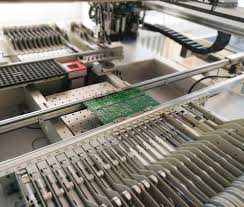
how to become a circuit board assembly services?
Furthermore, panelization enables manufacturers to leverage economies of scale. By processing multiple boards simultaneously, manufacturers can spread fixed costs, such as equipment setup and labor, across a larger number of units. This results in cost savings per unit and allows manufacturers to offer competitive pricing to their customers. Additionally, economies of scale enable manufacturers to meet higher demand volumes more efficiently, making panelization an attractive strategy for mass production scenarios.
In addition to cost circuit board assembly services savings, panelization enhances the consistency and quality of circuit board assembly services. By processing multiple boards in a single batch, manufacturers can ensure uniformity in component placement, soldering, and inspection processes. This reduces variability between individual boards and minimizes the risk of defects or inconsistencies, leading to higher overall product quality and reliability.
Moreover, panelization facilitates automation and streamlines production workflows. Automated assembly equipment, such as pick-and-place machines and reflow ovens, can be programmed to handle entire panels of circuit boards, further increasing throughput and efficiency. Additionally, standardized panel sizes and layouts enable seamless integration with automated handling systems, reducing the need for manual intervention and minimizing the risk of errors or delays.
Another benefit of panelization is its ability to simplify logistics and inventory management. By consolidating multiple boards onto a single panel, manufacturers can reduce the number of unique components and materials required for production. This simplifies procurement, inventory tracking, and supply chain management, leading to fewer stockouts, reduced lead times, and lower carrying costs. Additionally, standardized panel sizes and configurations enable efficient storage, handling, and transportation of assembled boards, further streamlining the logistics process.
In conclusion, panelization plays a vital role in optimizing the efficiency of circuit board assembly services. By consolidating multiple boards onto larger panels, manufacturers can minimize material waste, leverage economies of scale, enhance consistency and quality, facilitate automation, and simplify logistics and inventory management. As the demand for electronics continues to grow, panelization will remain a critical strategy for manufacturers seeking to maximize productivity and competitiveness in the global market.