

soldering benefit complex Pcb printed circuit board
In the complex world of printed circuit board (PCB) assembly, automated soldering techniques are a critical component in efficient and reliable production. While manual soldering offers the most precise control, it is often time-consuming and requires skilled technicians. Automated methods like wave and reflow can speed up production but are susceptible to errors such as surface-mount components exposing themselves to excessive heat and solder bridging on other areas of the circuit board. Selective soldering is an effective solution for combining the advantages of automation with the precision of manual processes to produce high-quality PCBs.
Selective soldering is a three-stage process that includes flux coating, preheat, and the actual soldering process. The first step is to apply a coating of active flux to the parts of the board that require soldering. This step is crucial because it helps prevent oxidation and bridging during the subsequent soldering stage, which is typically performed with a spray gun. The flux can be sprayed in a variety of ways including single-nozzle spray, simultaneous multi-point spray, and pattern spray.
Once the board has been coated with active flux, it is then preheated to help ensure that the board will be hot enough to solder once the soldering process begins. The preheat phase can be done in a number of different ways, but the most common method involves placing the pcb printed circuit board on a conveyor and spraying it with hot water. This will usually heat the board quickly, but can damage or warp the board if the temperature is too high.
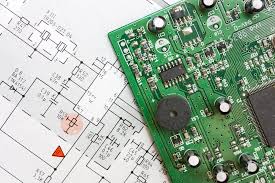
How does selective soldering benefit complex Pcb printed circuit board?
After the board has been preheat, it is ready for the final stage of selective soldering. At this point, the robot is set up to apply a bubble of solder to the parts that need it. This is a much faster and more accurate technique than traditional dip or squeegee-style soldering, which can be difficult to use on boards with many components.
As a result of this, the resulting solder joints will be stronger and more durable, and the quality of the finished product will improve. In addition to this, selective soldering also reduces costs by lowering the amount of rework and repair needed on each individual unit. Consequently, this is an excellent choice for companies that manufacture advanced or complex products that require specialized assembly processes.
The evolution of PCB technology has been driven by the relentless demand for smaller, faster, and more efficient electronic devices. Advances in manufacturing techniques, such as surface-mount technology (SMT) and multilayer PCBs, have enabled designers to pack increasing levels of functionality into ever-shrinking form factors. SMT, in particular, allows for the placement of components directly onto the surface of the PCB, eliminating the need for bulky through-hole components and further reducing size and weight.
In addition to the benefits cited above, selective soldering can also benefit manufacturers who have to work with challenging conditions on their printed circuit boards. Certain part configurations can prevent wave or reflow soldering from working effectively, such as when tall components interfere with the flow of the wave. In such cases, selective soldering can be a much more cost-effective and effective alternative.