

printed circuit board manufacturerss be used in RF/microwave
The realm of radio frequency (RF) and microwave engineering represents a frontier of innovation, powering wireless communication, radar systems, and satellite technology, among other applications. At the heart of these systems lie complex circuitry and precise signal processing, making the choice of components critical for performance and reliability. Printed circuit board manufacturers (PCBs) have emerged as key players in this domain, offering versatile solutions for RF and microwave applications that demand high frequencies, low signal loss, and tight tolerances.
The question of whether printed circuit board manufacturers can be used in RF/microwave applications is met with a resounding affirmation backed by decades of advancements and success stories. PCB technology has evolved to meet the stringent requirements of RF and microwave systems, offering specialized materials, precise fabrication techniques, and innovative design methodologies tailored to the unique challenges of high-frequency circuitry.
One of the primary considerations in RF/microwave applications is signal integrity, where even minor impedance mismatches or signal losses can degrade performance. Printed circuit board manufacturers have responded to this challenge by developing high-frequency laminates with low dielectric constants and controlled impedance characteristics. These materials minimize signal distortion and propagation delays, enabling the efficient transmission of RF and microwave signals across the PCB.
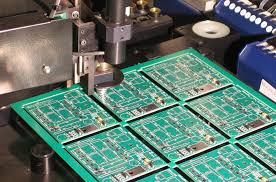
Can printed circuit board manufacturerss be used in RF/microwave applications?
Moreover, the design and layout of RF/microwave PCBs play a crucial role in maximizing performance and minimizing electromagnetic interference (EMI). Printed circuit board manufacturers employ advanced CAD software and simulation tools to optimize trace geometries, ground planes, and component placement for RF/microwave applications. Careful attention is paid to minimizing parasitic effects and ensuring signal integrity throughout the PCB layout.
In addition to materials and design considerations, printed circuit board manufacturers offer a range of fabrication techniques tailored to RF and microwave applications. Advanced processes such as plated through-hole (PTH) vias, microvias, and laser drilling enable precise control over conductor geometries and stack-up configurations, essential for achieving the desired impedance matching and signal routing in high-frequency circuits.
Furthermore, printed circuit board manufacturers have embraced emerging technologies such as additive manufacturing (AM) and embedded components to further enhance the capabilities of RF/microwave PCBs. AM techniques allow for the rapid prototyping of complex RF/microwave structures with intricate geometries, while embedded components enable the integration of passive devices directly into the PCB substrate, reducing parasitic effects and improving performance.
Despite these advancements, challenges remain in leveraging printed circuit board manufacturers for RF/microwave applications, including thermal management, material compatibility, and manufacturing tolerances. However, ongoing research and development efforts continue to address these challenges, driving innovation and pushing the boundaries of what’s possible in RF and microwave engineering.
In conclusion, the utilization of printed circuit board manufacturers in RF/microwave applications represents a convergence of expertise and technology, offering a pathway to enhanced performance, reliability, and versatility in high-frequency systems. As the demand for wireless communication, sensing, and imaging continues to grow, printed circuit board manufacturers will play an increasingly vital role in shaping the future of RF and microwave technology.